Prototype
Muscle Memory
Motion tracking and visual feedback for sports and dance
Muscle Memory explores motion tracking as a way to see and practise movement, through a series of sports and dance prototypes.
See where a swing differs
The backhand prototype compares a recorded swing with a reference movement. Tracked body landmarks make differences in positioning visible alongside the original footage.
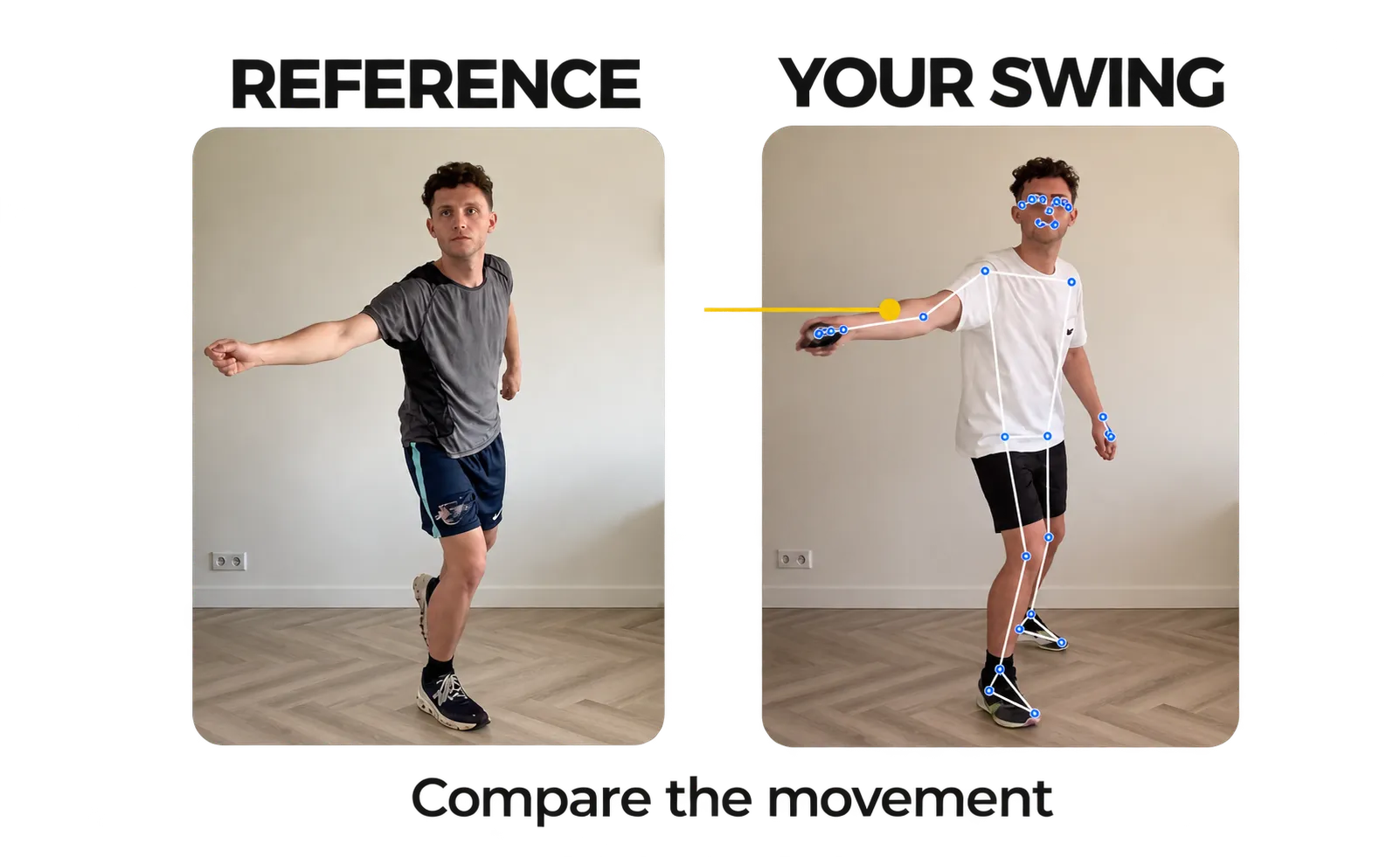
Compare a recorded backhand
The recorded-video prototype puts a reference swing and the participant's movement side by side. Body landmarks show how their positions differ as the swing unfolds.
Track racket-sport poses in VR
A separate Quest experiment uses body tracking to classify racket-sport poses, including forearm, lob and backhand swings. It explores recognising the player's pose in VR alongside the recorded-video comparison.
Learn a dance step by step
The dance prototype extracts poses from a reference video, waits for each match and colours the limbs to give feedback. A QR code then lets you download your recording with music and graphics.
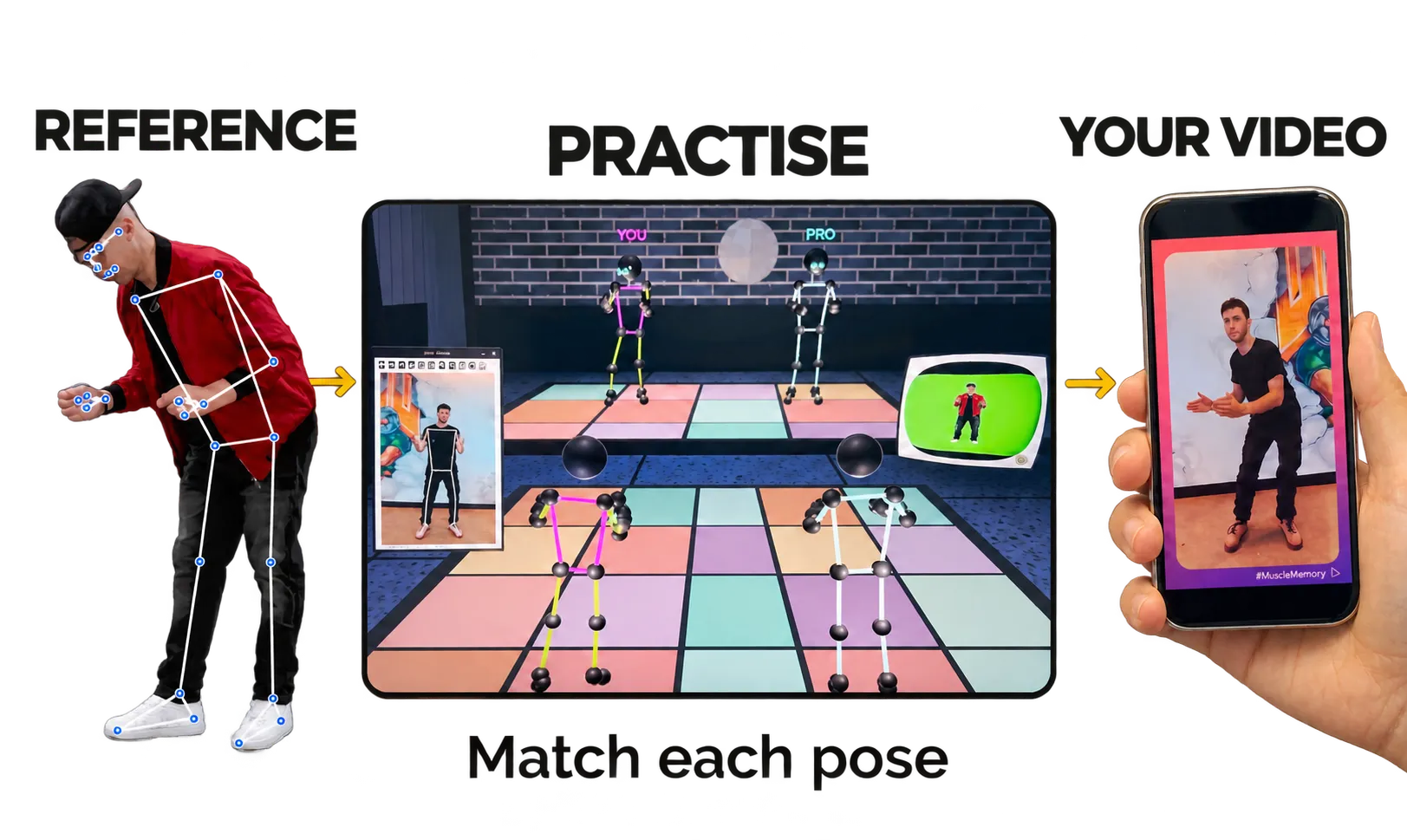
Take the practice home
The dance experiment turns the practice session into a recording. After following the reference poses, the player can scan a QR code to download their video with music and graphics. This short demo follows that flow.